
WHO WE ARE
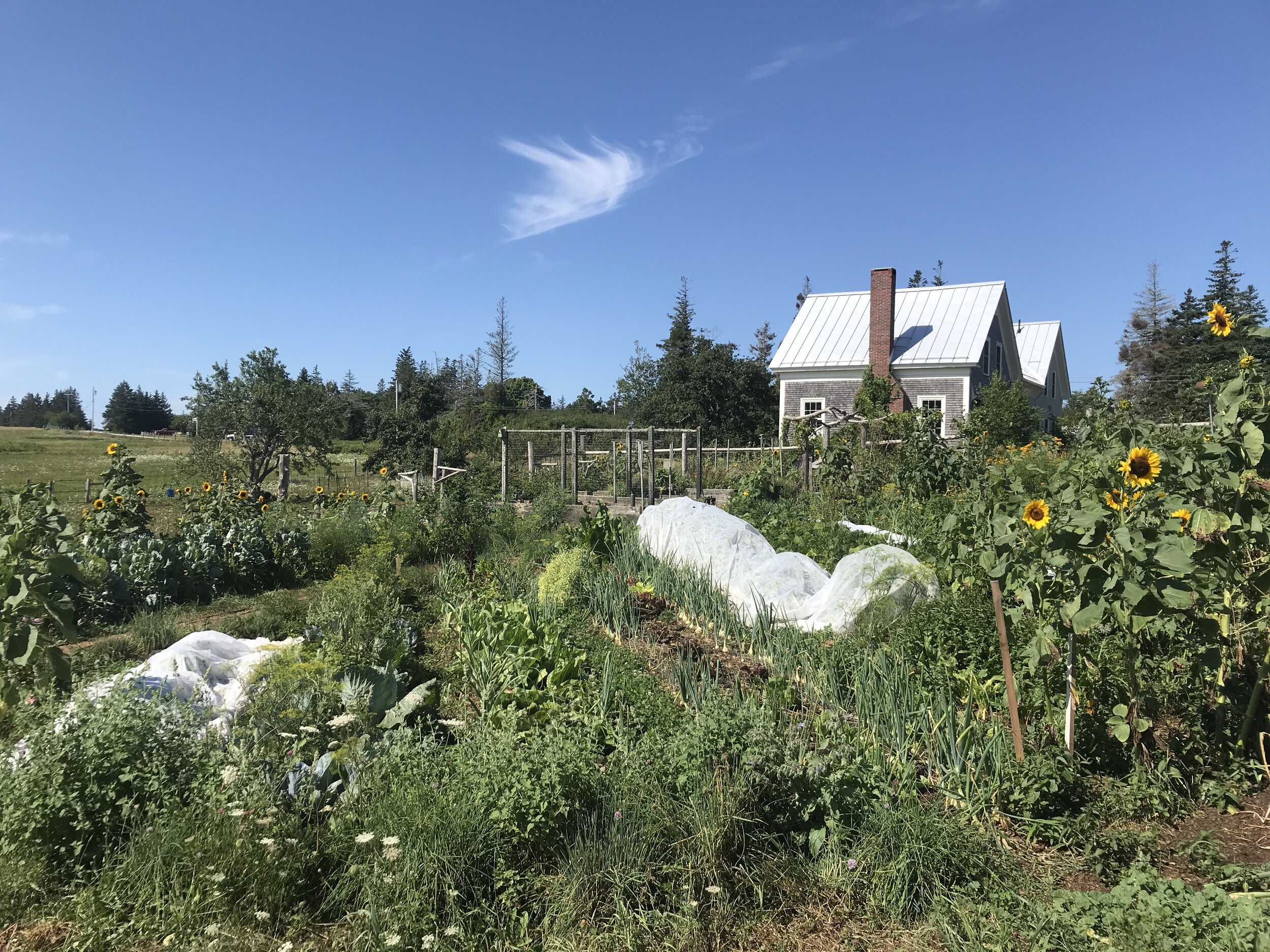
Cider Hill Farm is a small, diversified, organic farm located on North Haven Island in Penobscot Bay, Maine.
OUR PHILOSOPHY
Our aim is to provide premium products while improving our beautiful island ecosystem. CHF is a sanctuary for bees, insects, and birds due to our mowing and weeding practices; providing flowers and seed heads for their subsistence and increasing native species in our fields and woodlands are among our priorities. We do not use any pesticides or GMOs. Much of what we do is human or solar powered, only using tractors when absolutely necessary. Our chickens wander where they please, and our sheep and pigs enjoy a mobile lifestyle, rotationally grazing from pasture to pasture, which improves soil and carbon uptake, causing least harm. Our honey bees, along with many native bee species, help pollinate our garden and trees. Our compost includes local spent grains from North Haven Brewery, coffee grounds from Waterman’s Community Center on island, and the food scraps of community members.
PRODUCTS
Natural colored yarns, naturally dyed yarns, pelts, scarves are produced with wool from our organically-raised herd of Coopworth and Border-Leicester sheep. You can find them at our self-serve farm stand alongside an eclectic variety of vegetables, fruits, flowers, herbs, fermented foods, and pantry staples Saturday-Monday 9am-4pm. On Sunday, there is island roasted coffee available by the cup…please bring your own mug!
We sell registered Coopworth sheep and lambs for breeding or custom processing. Please email us for further detail.
INVASIVE SPECIES ERADICATION
Glossy Buckthorn is perhaps the most aggressive invasive species spreading across North Haven. We are making a consistent effort to cut back the Buckthorn that is growing on our property (pulling it up whenever possible, but cutting it back to hinder new growth at the very least) while planting more native species, some of which we start on farm. Over the past several years we have been rotationally grazing pigs on paddocks through the woodlands and following through pulling roots and planting cover crop, native bushes, and tress on the cleared land. This has been a very successful practice in order to replant our woodlands and slow the spread of the Buckthorn.